

How to use ChatGPT for content creation :::
Making an article chat app that uses Chatgpt to generate and communicate with users is a great idea! Here is a guide for building it, step by step:
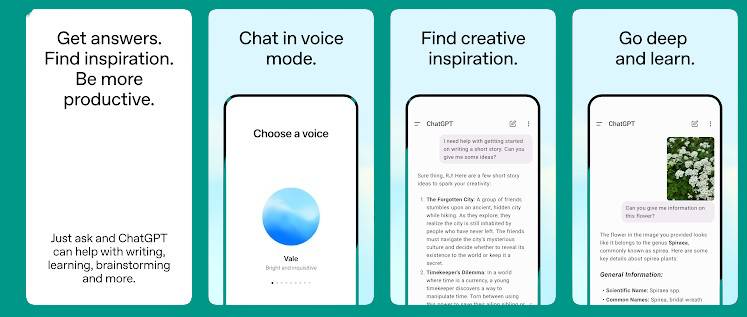
App -Screenshot.
Step 1: Plan your functions
Before diving into code, the essential functions for your app will decide. Here are some ideas:
- Chatbot -Interface: The user can ask questions and have a conversation with Chatgpt and articles or receive answers based on their questions.
- Article generation: Users can request articles on each topic and chatgpt generates detailed, coherent content based on the request.
- Content adaptation: Allow users to edit or refine the content. This can be fundamental, such as adding a paragraph, or has been provided with suggestions about rewriting.
- Article categorization: Users can select categories for their articles, eg tech, health, companies, etc.
- User profiles: Save user preferences and the articles that they have generated.
- Search and history: Give a history of the conversations or articles of the user they have generated.
Step 2: Choose the tech stack
Frontal“
- Respond or Vue.js For building interactive onion.
- Material user interface or Tailwind CSS For styling.
- Websocets or Remains API For communication with the backend.
Backend“
- Node.js of Explicitly To operate your app and to process requests.
- Chatgpt API (via OpenAI) for generating articles and chatting with users.
- A database Pretend Mongodb To store user data and history.
Authentication“
- Usage JWT For safe user application and sessions.
Hosting“
- Use platforms such as Heroku” VerseOr AWS To implement the app.
Step 3: Set OpenAi API
- Register for access to OpenAi’s API OpenAi’s API“
- After registering you will receive an API key. Save it safely in your backnd.
- Integrate the OpenAI -API into your backend to send requests and get answers to generate articles.
Step 4: Develop the Backend
Set Node.JS project“
- Make a basic node.js -app using
express“Set routes for creating and collecting articles, as well as handling chat.
mkdir chatgpt-article-app
cd chatgpt-article-app
npm init -y
npm install express axios dotenv- Make a basic node.js -app using
API -Routes“
- Make routes for interaction with the API of OpenAi.
Sample
server.js“const express = require('express');
const axios = require('axios');
const dotenv = require('dotenv');
dotenv.config();
const app = express();
const port = 3000;
app.use(express.json());
// ChatGPT API route
app.post('/generate-article', async (req, res) => {
const { topic } = req.body;
const response = await axios.post(
'https://api.openai.com/v1/completions',
{
model: 'text-davinci-003',
prompt: `Write an article about: ${topic}`,
max_tokens: 1000,
},
{
headers: {
'Authorization': `Bearer ${process.env.OPENAI_API_KEY}`,
'Content-Type': 'application/json',
}
}
);
res.json({ article: response.data.choices[0].text });
});
app.listen(port, () => {
console.log(`Server running on http://localhost:${port}`);
});Save user data“
- Implement routes to store user items and history and pick it up in a database such as Mongodb.
Step 5: Developed
REACT SET“
- Initialize a REACT project with
create-react-app“
npx create-react-app chatgpt-frontend
cd chatgpt-frontend
npm start- Initialize a REACT project with
Components“
- Make components such as
ArticleForm”ChatWindow”ArticleDisplayAndHistory“ - Usage Axios To send requests to the backend.
- Make components such as
Flow of interaction“
- Users enter a subject and the App sends it to the Backnd API.Once the article has been generated, you display it on the frontend.
Sample
ArticleForm.jsimport React, { useState } from 'react';
import axios from 'axios';
const ArticleForm = () => {
const [topic, setTopic] = useState('');
const [article, setArticle] = useState('');
const handleGenerateArticle = async () => {
const response = await axios.post('http://localhost:3000/generate-article', { topic });
setArticle(response.data.article);
};
return (
);
};
export default ArticleForm;Styling
- Style the app using CSS or Frameworks like Tailwind or Material user interface To make it more attractive.
Step 6: Implement the app
- Backend: Implement the backend on a platform like Heroku“
- Frontal: Implement the Frontend Verse or Netlife“
- Connect Frontend and Backend: UPDATE API -URLs in the frontnd to point to the Backend used.
Step 7: Optional functions to add
- Content personalization: Use machine learning or simple algorithms to recommend topics based on user preferences.
- Income: Offer premium functions such as high -quality articles, extra processing tools or access to exclusive content.
- Real -time chat: Integrate with real -time chat functionality with the help of Websocets To have conversations with Chatgpt.
Step 8: Testing and debugging
Test the app before you go live. Make sure:
- Articles are generated correctly.
- There are no security vulnerability, especially when processing user data.
- The user experience is flexible and intuitive.
Conclusion
By following these steps, you can create an app for generating items from ChatGPT that not only offers high-quality users, but also offers a fun and interactive experience.