Local SEO services help businesses improve their visibility in geographically relevant search results and connect with customers who are looking for nearby products or services. Whether you manage a restaurant, retail store, clinic, professional service, or small business, appearing in relevant local searches can help generate enquiries, calls, bookings, and visits.
However, local search optimization involves more than adding a city name to your website. It requires an accurate Google Business Profile, relevant local content, keyword research, genuine customer reviews, consistent business information, and a technically sound website.
At ARNL Web Solutions, we believe a successful local SEO strategy should connect online visibility with measurable business objectives. This guide explains what local SEO services include, how local rankings work, which strategies businesses should prioritize, and how to choose the right local SEO provider.
What Is Local SEO?
Local SEO is the process of improving a business’s online presence to attract customers searching for products or services in a specific geographical area.
Unlike broader SEO campaigns that may target national or international audiences, local SEO focuses on location-related searches. For example, someone searching for a plumber in Dallas, a restaurant near them, or an SEO agency in Guwahati may be looking for a business that can serve a particular location.
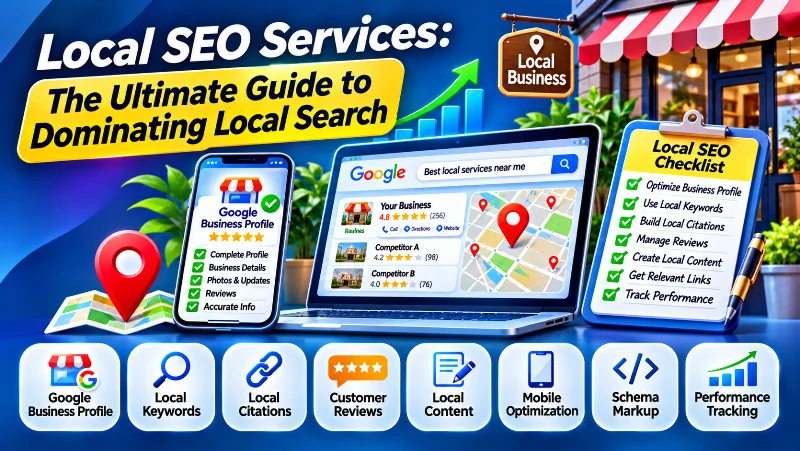
Local SEO services help businesses improve their presence across Google Search, Google Maps, business directories, and their own websites. Typical activities include:
- Google Business Profile setup, verification support, and optimization.
- Local keyword research and search intent analysis.
- Location and service page optimization.
- Local citation and business listing management.
- Customer review and reputation management guidance.
- Local content development.
- Technical SEO and mobile optimization.
- Relevant local link building and digital PR.
- Local search performance monitoring and reporting.
Why Local SEO Matters
Customers often use search engines to discover businesses, compare available services, check operating hours, read reviews, and find directions. A business that maintains useful and accurate online information is better positioned to be discovered during these searches.
- Local Search Visibility: Helps relevant customers discover your business through geographically related searches.
- Customer Enquiries: Can generate calls, website visits, bookings, and messages.
- Business Credibility: Accurate information and genuine customer reviews help people evaluate your business.
- Competitive Opportunities: Smaller businesses can compete for relevant local searches by demonstrating expertise and serving specific areas effectively.
- Physical Store Visits: Helps customers discover eligible physical locations through Google Search and Maps.
Google’s local results are mainly influenced by three factors: relevance, distance, and prominence. There is no guaranteed way to pay for better organic local rankings. Businesses should instead focus on accurate information, useful content, and genuine reputation building.
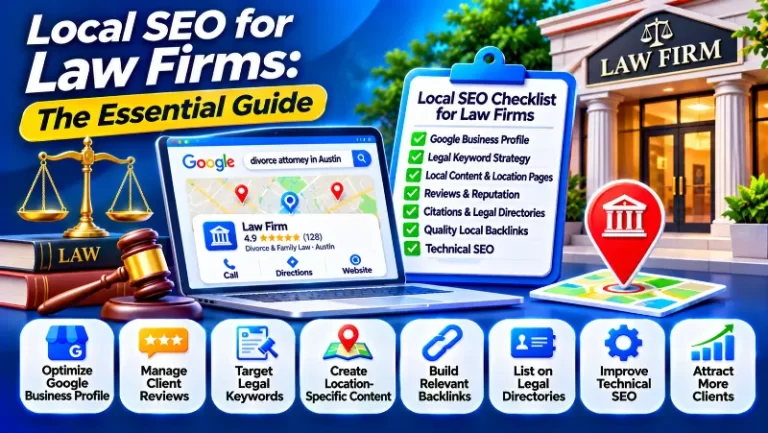
For businesses in specialized industries, explore our guide to local SEO for law firms.
Core Elements of Local SEO Services
A complete local SEO campaign combines multiple activities. Each element supports a different part of the customer’s journey, from discovering a business to deciding whether to contact it.
| Element | Role in Local SEO |
|---|---|
| Google Business Profile | Manages business information, photos, services, and customer interactions across Google. |
| Local Keywords | Targets relevant search queries related to a business’s services and locations. |
| Business Citations | Maintains accurate business information across relevant directories and platforms. |
| Customer Reviews | Provides genuine feedback that helps potential customers evaluate a business. |
| Website Optimization | Improves page structure, mobile usability, content relevance, and performance. |
| Local Content | Explains services, locations, customer needs, and local expertise. |
| Local Links | Builds relevant connections with local organizations, publications, and websites. |
| Performance Tracking | Measures visibility, customer interactions, website visits, and enquiries. |
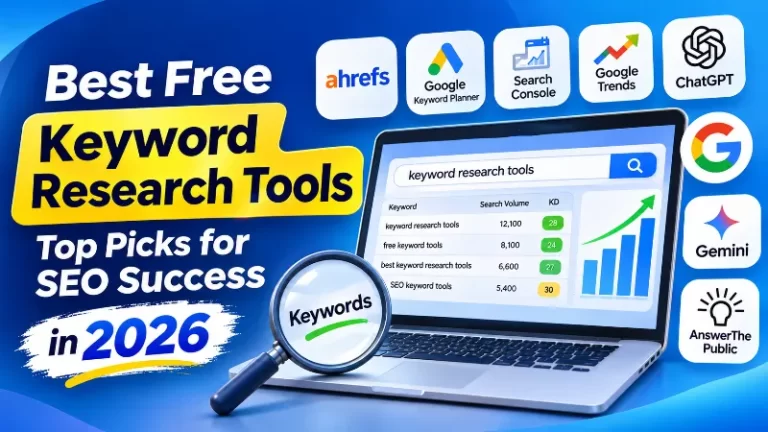
Practical tip: Use Google Keyword Planner and other research tools to discover relevant search terms. Review our best free keyword research tools guide for additional resources.
Local SEO Strategies That Deliver Results
1. Optimize Google Business Profile
Google My Business is now called Google Business Profile. It is an important part of local search visibility because it allows eligible businesses to manage how their information appears on Google Search and Maps.
A well-maintained Business Profile helps potential customers understand what your business offers, where it operates, and how to contact you. It can also display photos, reviews, operating hours, and other relevant business information.
Google Business Profile Optimization Checklist:
- Verify the Business: Claim and complete the applicable verification process.
- Complete Business Information: Add the accurate business name, address or service area, phone number, website, and opening hours.
- Select Relevant Categories: Choose categories that accurately represent the main business and its services.
- Write a Useful Description: Explain the business’s products, services, and experience without keyword stuffing.
- Upload Genuine Photos: Add useful images of the premises, staff, products, and completed work.
- Maintain Accurate Hours: Update normal operating hours, special hours, and temporary closures.
- Manage Reviews: Request genuine customer feedback and respond professionally.
- Update Services: Keep products, services, and other applicable profile information current.
A Business Profile should reflect how your business is represented in the real world. Do not add extra keywords, locations, or promotional phrases to the business name unless they are genuinely part of its established name.
Google’s guidelines also distinguish storefront businesses, service-area businesses, and hybrid businesses. Use a real eligible address and configure service areas according to the actual business model.
Read Google’s official Business Profile guidelines before making major changes.
For step-by-step recommendations, explore our local SEO optimization guide.
2. Leverage Local Keywords
Local keyword research identifies the search terms people use when looking for products and services in a particular location. A good keyword strategy considers both the service and the customer’s geographic intent.
Examples include:
- Service Keyword: Professional plumbing services.
- Location Keyword: Plumber in Dallas.
- Service and Location: Emergency plumber in Dallas.
- Commercial Query: Best plumbing company in Dallas.
- Question-Based Query: How much does a plumbing repair cost in Dallas?
Use relevant local keyword phrases naturally in:
- SEO titles and meta descriptions.
- Main page headings and relevant subheadings.
- Service pages and genuine location pages.
- Useful blog articles and frequently asked questions.
- Image descriptions and captions where appropriate.
- Business information when the platform provides a suitable field.
Example: A bakery in Seattle may create useful pages about organic cupcakes, gluten-free products, birthday cakes, and delivery availability in the areas it genuinely serves.
Do not create dozens of nearly identical city pages by changing only the place name. Every location page should provide useful information that is genuinely relevant to customers in that area.
For niche industries, explore our guides to local SEO for law firms and local SEO for small businesses.
3. Build Local Citations and Relevant Backlinks
Local citations are online mentions of a business that may include its name, address, phone number, website, and other details. They can appear in business directories, industry platforms, maps, and local publications.
Local citation management helps keep important business information accurate across the web.
- Maintain consistent business details across important platforms.
- Update inaccurate addresses and phone numbers.
- Correct duplicate or outdated listings where possible.
- Submit your business to relevant industry directories.
- Use established platforms such as Bing Places and Apple Business Connect where suitable.
- Prioritize trustworthy directories over large numbers of low-quality submissions.
Local backlinks are links from other websites that can help people discover your business and contribute to its online prominence. Examples include links from local publications, industry associations, community organizations, and relevant business partners.
Useful local link-building activities include:
- Contributing expert information to relevant local publications.
- Participating in legitimate community projects.
- Collaborating with complementary businesses.
- Creating useful local resources that other websites may reference.
- Supporting relevant industry or community events.
Do not purchase large quantities of unrelated backlinks or participate in manipulative link schemes. Focus on relevant, genuine relationships and useful editorial mentions.
Technical Local SEO Tactics

Technical SEO supports local search visibility by making the website accessible, responsive, and easy for visitors and search engines to understand. A technically sound website also helps potential customers find business information and contact the company.
1. Mobile-First Design
Many local searches happen when people are away from home or actively looking for nearby services. Your website should make it easy for mobile visitors to find opening hours, location information, contact details, and service descriptions.
Google primarily uses the mobile version of a website’s content for indexing and ranking. This is known as mobile-first indexing.
- Use a responsive website design.
- Keep navigation simple and mobile-friendly.
- Make phone numbers and contact actions easy to access.
- Compress and properly size images.
- Reduce unnecessary scripts and third-party resources.
- Check forms, buttons, and interactive elements on actual mobile devices.
- Monitor page loading and Core Web Vitals.
For WordPress websites, explore our guide to fastest free WordPress themes.
Google’s mobile-first indexing documentation explains the importance of maintaining equivalent mobile content and accessible resources.
2. Internal Linking
Internal links connect related pages on the same website. They help visitors discover additional information and provide search engines with crawlable paths to important pages.
For example, a local service page can link to:
- A detailed page explaining the service.
- A relevant location page.
- A helpful article answering customer questions.
- A related case study or portfolio page.
- A contact or appointment page.
Use descriptive anchor text that explains the destination. Avoid adding unrelated links or repeating the same exact-match keyword in every link.
Learn more in our guide to internal linking strategies.
3. Local Business Schema Markup
Structured data helps search engines understand information about a webpage and the entities it describes. Eligible businesses can use relevant LocalBusiness structured data to provide details such as business name, address, phone number, opening hours, and other applicable information.
For example, a business website may use an appropriate LocalBusiness subtype to describe its actual business category.
Important implementation considerations:
- Use the most appropriate Schema.org type for the business.
- Make sure business information matches the visible website content.
- Use accurate addresses, telephone numbers, and opening hours.
- Avoid adding fake reviews, ratings, or other unsupported information.
- Validate the implementation with Google’s testing tools.
Structured data does not guarantee higher local rankings or rich results. It should be treated as a way to communicate accurate business information to search engines.
Official guide: Google Local Business structured data.
Maximizing Local SEO Through Community Engagement
Local SEO is not limited to website changes and business listings. Building relationships within the community can help businesses increase recognition, attract customers, and create opportunities for relevant online mentions.
Partner with Local Businesses
Collaborating with complementary businesses can create useful opportunities for both audiences.
- Co-host local events and workshops.
- Collaborate on useful content and community guides.
- Cross-promote genuinely complementary products or services.
- Participate in local business associations.
- Share relevant resources with partners and customers.
For example, a restaurant might collaborate with a nearby event organizer to publish a useful guide about local dining options for event visitors.
Sponsor Local Events and Community Activities
Sponsoring relevant community activities can help businesses build local recognition and establish meaningful relationships.
Possible activities include:
- Supporting charity events and community programs.
- Sponsoring local sports or cultural activities.
- Participating in business networking events.
- Supporting educational workshops and local initiatives.
Any website mention or backlink should arise naturally from legitimate participation. Sponsorships should not become a way to buy manipulative links.
Create Locally Focused Content
Useful local content can answer questions that customers in a particular area actually ask. It also helps communicate a business’s knowledge of its services and local market.
- Blog Articles: Write practical guides addressing local customer needs.
- Videos: Demonstrate services, share genuine customer experiences with permission, or explain how your business works.
- Case Studies: Describe real projects and outcomes without exaggerating results.
- Community Guides: Publish useful resources about relevant local topics.
For social media ideas, read our guide on promoting your brand on Instagram.
Services You Can Expect from a Local SEO Agency
A professional local SEO provider should offer services that address the specific needs of your business rather than sell the same package to every customer.
| Service | Typical Activities | Business Objective |
|---|---|---|
| Local SEO Audit | Review website, business listings, competitors, and local visibility. | Identify problems and opportunities. |
| Business Profile Management | Optimize categories, information, photos, services, and updates. | Improve business information and discoverability. |
| Local Keyword Research | Research service and location-related searches. | Reach relevant local audiences. |
| Website Optimization | Improve service pages, headings, content, metadata, and internal links. | Make website pages more useful and relevant. |
| Citation Management | Audit and correct relevant business listings. | Maintain accurate business information. |
| Review Management Guidance | Implement ethical review-request and response processes. | Build customer trust and reputation. |
| Local Link Building | Develop legitimate local partnerships and editorial opportunities. | Increase relevant online recognition. |
| Reporting and Analytics | Measure visibility, interactions, traffic, and leads. | Understand campaign performance. |
How to Choose the Right Local SEO Agency
Selecting a local SEO agency is an important business decision. A reliable provider should be able to explain its methods, show what work will be performed, and connect its activities to meaningful business objectives.
Before hiring an agency, consider these questions:
- What Does the Audit Include? Ask whether the agency reviews your website, Business Profile, keywords, competitors, and existing listings.
- How Is the Strategy Customized? The plan should reflect your industry, competition, service area, and business goals.
- What Work Will Be Delivered? Ask for a clear breakdown of optimization tasks, content work, technical improvements, and reporting.
- How Are Results Measured? Understand which metrics are used to evaluate visibility and actual business outcomes.
- Are Their Methods Compliant? Avoid agencies that promise guaranteed rankings, buy fake reviews, or use manipulative link schemes.
- Who Owns the Accounts? You should retain control of your Google Business Profile, website, analytics, and other important business accounts.
- How Often Will You Receive Reports? Establish a reporting schedule and understand what information will be included.
A trustworthy agency should explain what it can influence and what depends on search engines, competitors, and customer location. No provider can guarantee a particular Google local ranking.
What Should a Local SEO Report Include?
A useful report should explain what has been done, what has changed, and which activities should happen next.
- Google Business Profile visibility and customer interactions.
- Relevant local search queries and keyword performance.
- Website organic traffic and local landing-page performance.
- Calls, website clicks, enquiry forms, and other trackable conversions.
- Local citation corrections and listing status.
- Review activity and reputation-management progress.
- Technical SEO improvements and unresolved issues.
- Work completed, upcoming tasks, and campaign priorities.
Tools for Local SEO Success
Local SEO tools help businesses research keywords, manage business listings, monitor search performance, and understand customer activity. Choose tools based on your requirements and available budget.
| Tool | Purpose |
|---|---|
| Google Business Profile | Manage eligible business listings, information, photos, and reviews. |
| Google Search Console | Monitor website search visibility, queries, indexing, and technical performance. |
| Google Analytics | Measure website traffic, landing pages, and conversions. |
| BrightLocal | Monitor local rankings, citations, reviews, and listings. |
| Moz Local | Manage business listings and local presence where supported. |
| Semrush | Research keywords, competitors, and local SEO opportunities. |
| Whitespark | Research local citations and support local search campaigns. |
| Google Keyword Planner | Discover keyword ideas and review advertising research data. |
How to Measure Local SEO Performance
Local SEO success should not be measured only by keyword positions. A business may improve visibility without receiving more qualified enquiries, so it is important to connect search data with actual business activity.
Useful measurements include:
- Business Profile Views: Monitor how customers discover the business through Google Search and Maps.
- Search Queries: Review the terms people use to find the Business Profile.
- Website Clicks: Measure visits from the Business Profile website link.
- Calls and Directions: Monitor available customer interactions.
- Local Website Traffic: Review organic visits to location and service pages.
- Qualified Leads: Track enquiries, bookings, and calls that relate to the business’s services.
- Conversion Rate: Evaluate how effectively website visitors complete meaningful actions.
Google Business Profile performance data is available for verified profiles, and the metrics shown depend on the features available to the business. Combine this information with Google Analytics and Search Console to understand the complete customer journey.
Official reference: Understand Google Business Profile performance.
Local SEO Implementation Checklist
Use this checklist when launching a local SEO campaign or reviewing an existing business website.
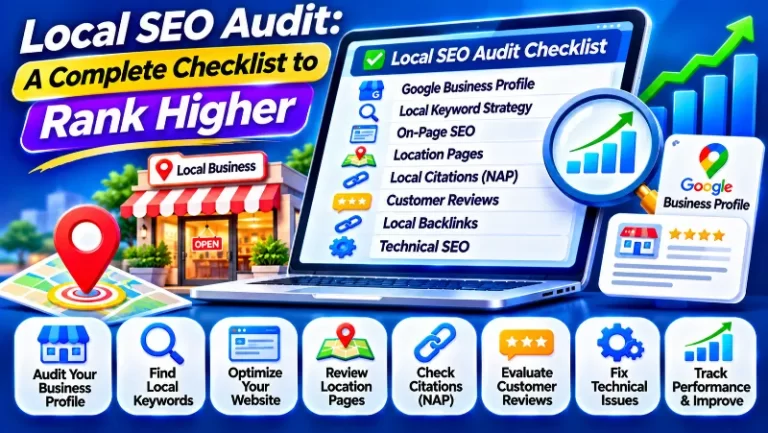
- Confirm that the business is eligible for a Google Business Profile.
- Verify the profile and provide accurate business information.
- Choose relevant business categories.
- Check whether the business should display a storefront address or use a service area.
- Research relevant service and location keywords.
- Optimize important service and location pages.
- Maintain consistent business information on relevant directories.
- Create a process for requesting and responding to genuine reviews.
- Publish useful local content.
- Develop legitimate local partnerships and editorial mentions.
- Make the website responsive and mobile-friendly.
- Check page performance, HTTPS, indexing, and structured data.
- Connect Google Analytics and Google Search Console.
- Review customer interactions and qualified enquiries regularly.
- Update the strategy based on performance and business priorities.
Common Local SEO Mistakes to Avoid
- Keyword Stuffing: Repeating location keywords unnaturally across pages or Business Profile information.
- Fake Business Addresses: Using virtual or unrelated addresses that do not comply with Google eligibility rules.
- Fake Reviews: Purchasing reviews or offering incentives in exchange for customer ratings.
- Duplicate Business Profiles: Creating unnecessary listings for the same eligible business location.
- Unhelpful Location Pages: Publishing nearly identical pages for multiple cities without unique local value.
- Low-Quality Citations: Submitting business information to irrelevant or questionable directories.
- Unnatural Link Building: Buying links or participating in manipulative link schemes.
- Ignoring Mobile Users: Making contact details, maps, and service information difficult to access on smartphones.
- Ignoring Measurement: Reporting rankings without measuring calls, visits, bookings, or other business outcomes.
Frequently Asked Questions About Local SEO Services
What do local SEO services include?
Local SEO services commonly include Google Business Profile optimization, local keyword research, website optimization, citation management, review strategy, local content, relevant link building, and performance reporting.
How long does local SEO take to show results?
There is no fixed timeline. Results depend on the business’s current online presence, competition, location, website condition, and the work being performed. Some listing corrections may appear relatively quickly, while broader visibility improvements can take longer.
Does every business need a Google Business Profile?
Businesses that meet Google’s eligibility requirements can benefit from a Business Profile. Online-only businesses without an eligible in-person customer interaction should not create a profile simply to gain local rankings.
Are local citations still useful?
Accurate business listings help customers find correct contact and location information. Focus on trusted and relevant directories rather than submitting your business to as many websites as possible.
Can local SEO help small businesses compete with larger companies?
Yes. A smaller business can target specific services, genuine service areas, and customer needs. However, local rankings also depend on proximity, relevance, prominence, and competition, so results are not guaranteed.
Can an agency guarantee the top position in Google Maps?
No legitimate agency can guarantee a particular organic local ranking. Google determines local results using its own systems, including relevance, distance, and prominence.
Conclusion: Build a Stronger Local Search Presence
Local SEO services help businesses connect with customers who are searching for relevant products and services in specific geographic areas. A well-maintained Google Business Profile, useful local content, accurate citations, genuine customer reviews, and a technically sound website all contribute to a stronger local online presence.
Start by understanding your customers and service area. Then build a strategy around accurate business information, relevant keywords, helpful service pages, reputable local mentions, and consistent performance monitoring.
Remember that local SEO is an ongoing process, not a one-time ranking trick. No particular number of reviews, directory listings, or backlinks can guarantee a top position. Sustainable results come from useful information, genuine business reputation, and consistent optimization.
For additional resources, explore our local SEO optimization guide, local SEO for small businesses, and complete SEO guide.
At ARNL Web Solutions, we believe that effective local search marketing should deliver more than rankings. It should help potential customers discover your business, understand your services, and take meaningful action.